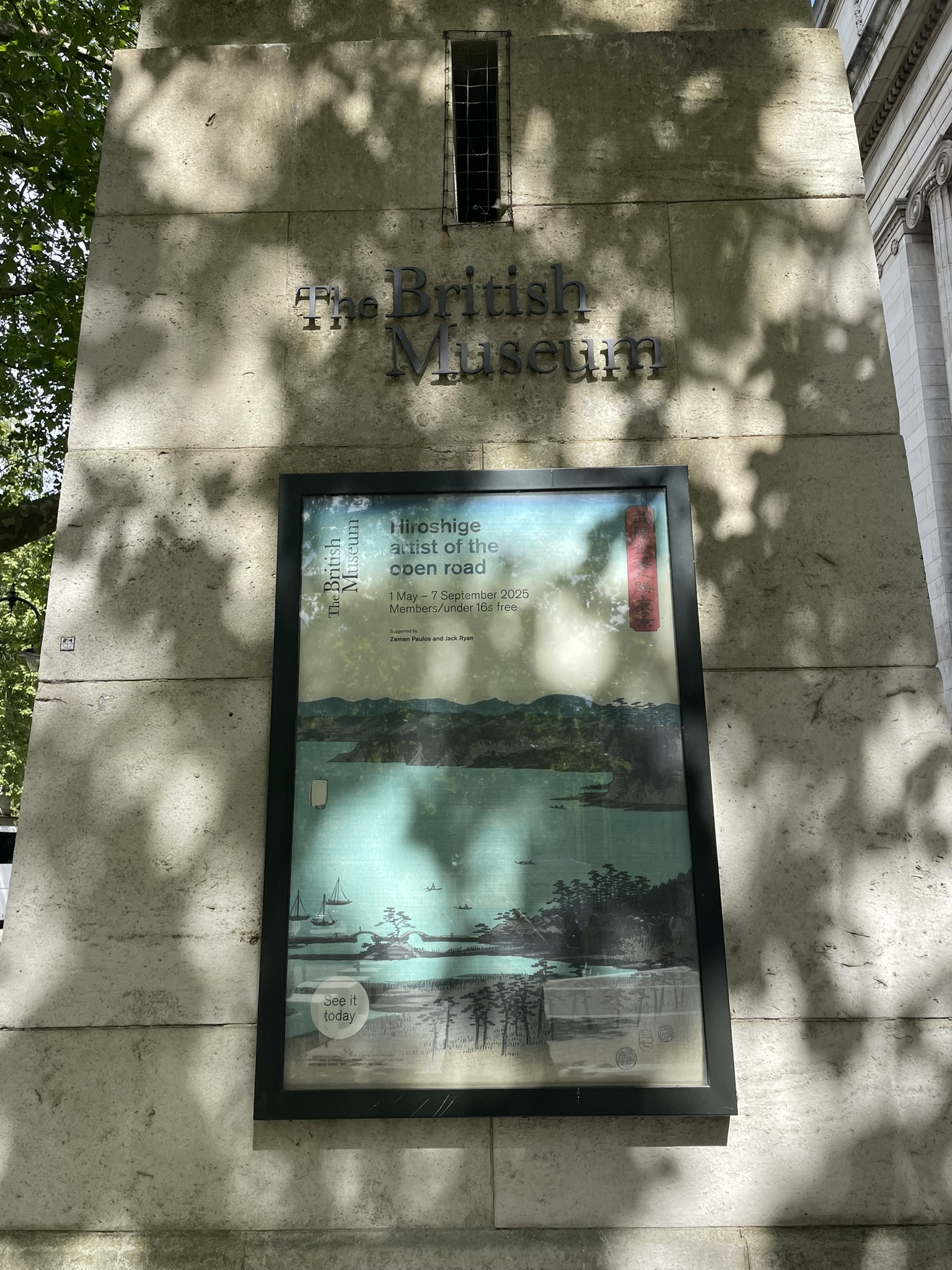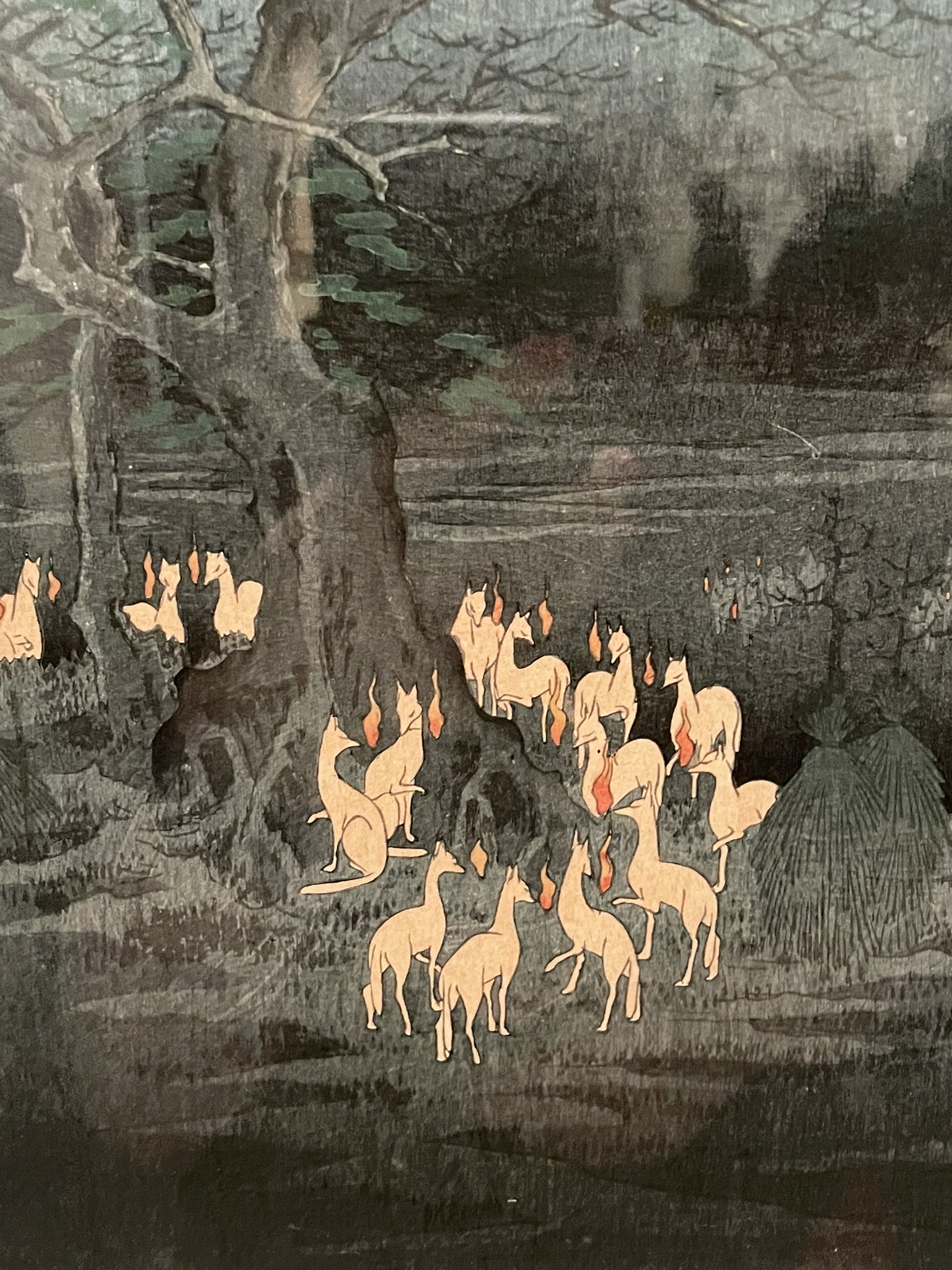
A visit to the British Museum last year took us through Hiroshige: artist of the open road, an exhibition exploring the work of Utagawa Hiroshige and his depiction of travel, landscape and everyday life in Edo-period Japan.
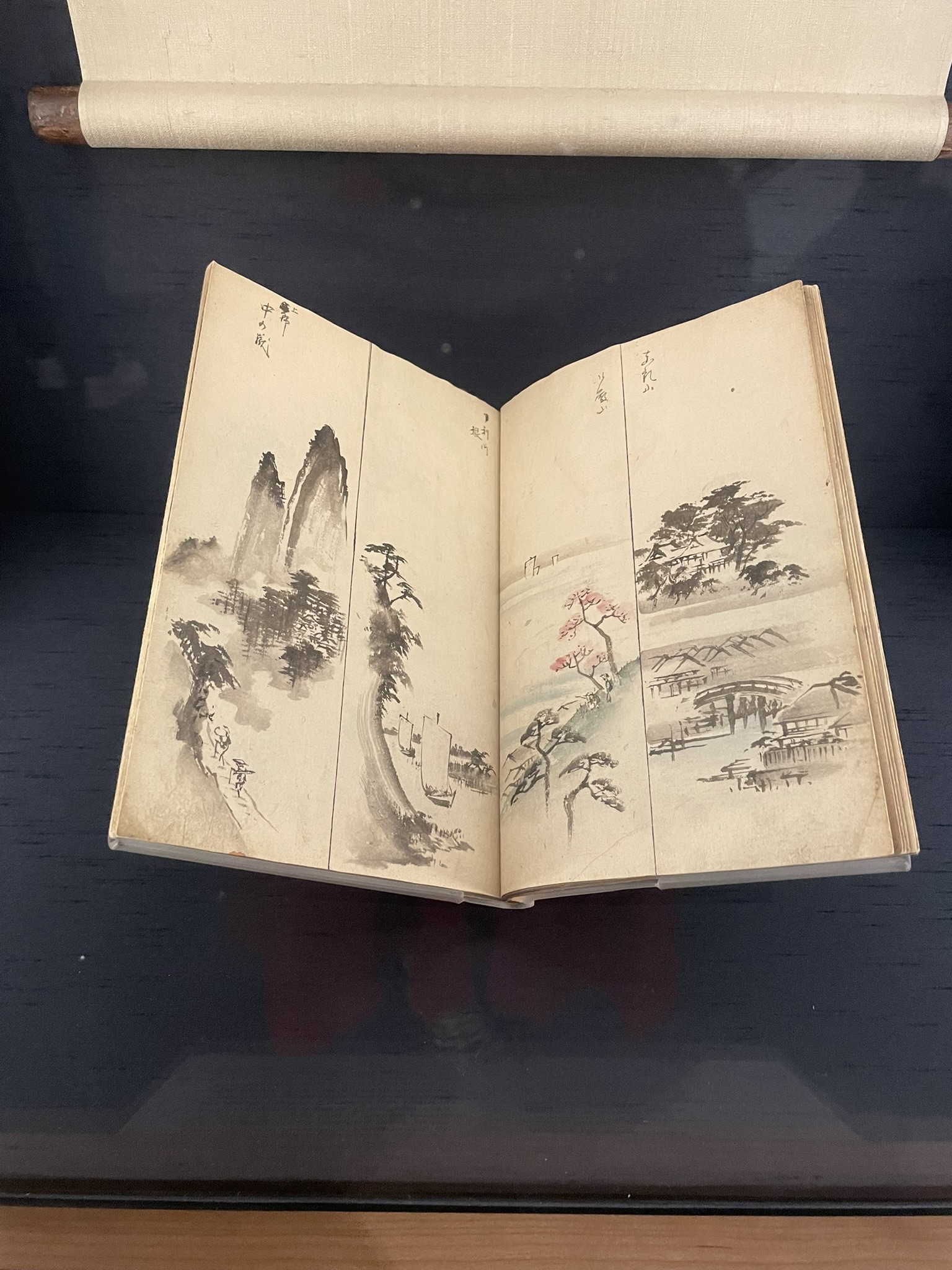
Best known for series such as The Fifty-three Stations of the Tōkaidō, Hiroshige’s prints capture moments of movement, travellers on roads, shifting weather, changing seasons, framing landscape as something experienced rather than observed. There’s a lightness to the compositions, with bold colour, flattened perspective and carefully cropped views that feel surprisingly modern.
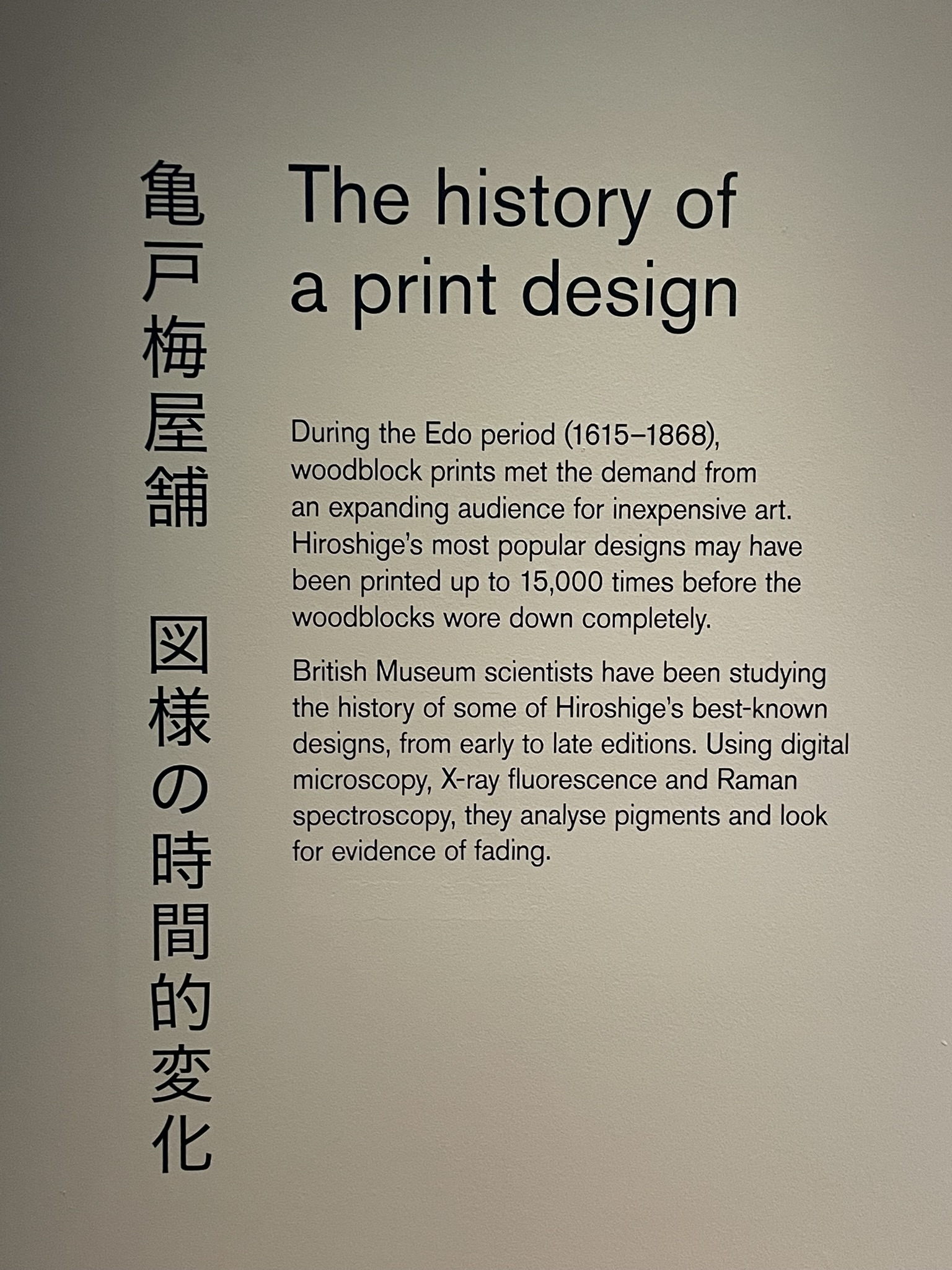
Alongside the prints, the exhibition unpacked the process behind them: the collaboration between artist, carver and printer, and how designs evolved across multiple editions as blocks wore down or colours shifted. Seeing early and later impressions side by side made that passage of time visible in a way that’s hard to replicate elsewhere.
A simple but well-curated reminder that repetition, variation and context are as much a part of design as the original idea, something that carries through far beyond print.